Many home offices start as a laptop on the dining table and never really grow up from there. When you spend most of your working day in one spot, the furniture around you starts shaping how you feel by 5 o’clock.
A comfortable home office balances comfort with organization, plus a little of your own style. Our team at Graber’s Handcrafted Furniture helps people put these spaces together. We believe that the right furniture makes working from home far easier to enjoy over the long run.
In this guide, we will help you design a cozy home office setup, starting with layout, seating, and storage, and finishing with lighting and small personalized touches that make the room feel like yours.
Start With Your Workday Needs
First, picture an ordinary workday in your room. A space you use eight hours a day needs different furniture than one you visit for an hour each week.
Some people need room for two monitors and a printer, while others spread out paperwork or meet with clients over video. If the office is shared, you will have to count both people’s habits.
Prepare a short list of everything that needs to live in the room. This will help you make every later decision easily.
Choose the Right Location

A dedicated room is ideal when you have one. If you don’t, look for these options:
- A spare bedroom
- Any quiet corner of the living room
- A loft or upstairs landing
- A built-in nook or alcove
Low traffic and natural light matter most. It also helps to check privacy and outlet placement before you commit. A spot away from the laundry room or TV keeps background noise down on calls.
Measure the Space Before Selecting Furniture
Measuring first saves you from the most common home office mistake. You will want at least 36 inches of clearance behind the desk so your chair can roll back, along with space for drawers to open fully.
Here is a simple measuring checklist:
- Length and width of each wall
- Window positions and heights
- Door swings, including closet doors
- Outlet and cable locations
- Main walking paths through the room
- Ceiling height, if you are considering a tall bookcase
A custom desk or bookcase earns its keep in narrow rooms and awkward alcoves, since it can be built to the exact measurement of an odd corner.
Select a Desk That Fits Your Work Style

The desk sets the tone for a comfortable home office, so match its style to how you work.
- Writing Desk: It keeps a slim profile, which suits compact spaces and lighter computer use.
- Executive Desk: Best for a dedicated office, larger work surfaces, and frequent paperwork, an executive desk gives you a large work surface and plenty of drawer storage.
- L-Shaped Desk: It wraps around a corner, giving you two work zones in one piece. You can keep monitors on one side and a clear writing surface on the other, or share the desk with a partner.
- Custom Desk: This option makes sense when standard sizes do not fit the room or your storage needs. You can set the exact dimensions and drawer layout, then choose the wood species and stain through our design center. A keyboard tray or built-in file storage can be worked into the design as well.
Our desk collection also includes lift desks for switching between sitting and standing, plus rolltop desks with tuck-away storage.
Invest in a Comfortable, Supportive Chair

Good back support matters most in an office chair, especially in the lower back, where long workdays show up first.
Mayo Clinic suggests adjusting the chair so your feet rest flat on the floor, with a footrest if they do not reach. For long workdays, adjustable height and armrests let you fine-tune the fit.
An upholstered or leather seat can pick up the colors in the room, while a wood frame ties the chair to your desk. Our office chairs come in styles that suit both.
Build in Enough Storage

Clutter is the quickest way to make an office feel stressful, and the right storage keeps your desk clear for actual work.
File cabinets handle documents and supplies, while bookcases hold books and baskets, plus a bit of decor. For printers and cords, a closed cabinet or credenza hides the visual noise behind doors. A few open shelves left empty today will absorb new projects next year.
Set Up Lighting That Reduces Eye Strain
OSHA recommends placing your monitor perpendicular to a window, which lets you enjoy daylight without glare bouncing off the screen.
A desk lamp adds focused task lighting for reading and paperwork. You can also go for overhead or ambient lighting to keep the room comfortable on dark winter afternoons. Similarly, warm bulbs make the space feel far more welcoming than harsh cool light.
Make the Office Ergonomic
Most ergonomic guidelines agree on a few basics:
- Monitor height: The top of the screen should sit at or slightly below eye level, roughly 20 to 40 inches from your eyes.
- Keyboard and mouse: Your hands work best at or slightly below elbow level, which lets your shoulders stay relaxed.
- Reach: Keep things you use all day, like your phone and notepad, within easy reach of your chair.
- Extras: A footrest or keyboard tray can close the gap when your desk and chair do not line up. A monitor stand can raise a screen that sits too low.
Your setup does not need to be perfect on day one. Most people fine-tune it over a few weeks.
Create a Professional Video-Call Background
Your office shows up in every video call, so a clean, uncluttered wall behind the desk keeps attention on you. A bookcase makes a natural backdrop, especially with a few plants or a piece of art on the shelves.
Light works best when it falls on your face from the front or side, since a bright window behind you turns you into a silhouette. Use a cable tray under the desk to keep stray cords out of the frame.
Add Personality to Your Comfortable Home Office
A few family photographs or plants bring warmth, and a consistent color palette keeps those touches from feeling scattered.
Wood tone does much of the work here, since a stain that matches the rest of your home helps the office feel connected. Leaving a few empty inches on each shelf keeps the room calm and focused.
Choose Furniture Built for the Long Term
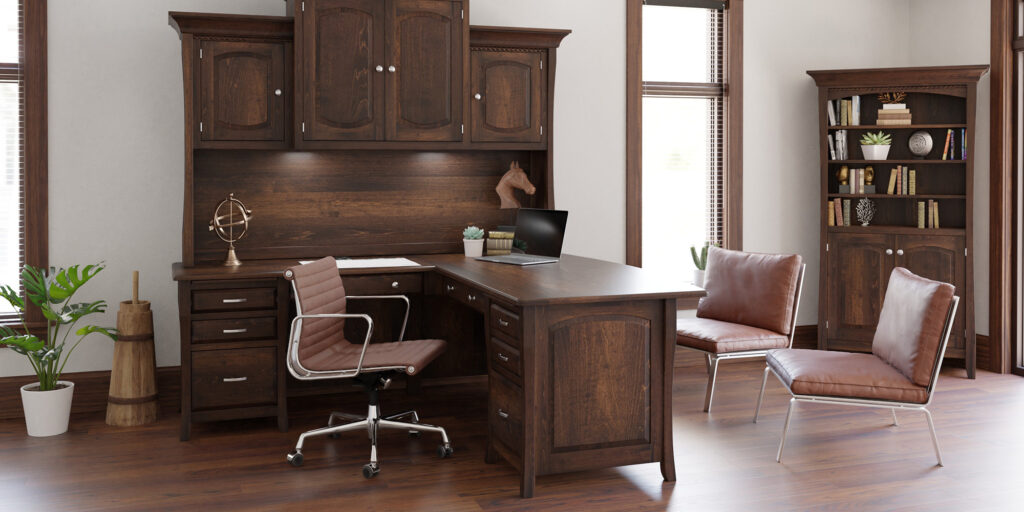
A comfortable home office depends on furniture that can handle daily use. Solid wood desks and file cabinets last for decades, and you can sand and refinish a scratched surface to make it look new again.
You can easily move a well-made desk and bookcase into a bedroom or study if you change the office later, or use them as part of a family homework space. Our office furniture is Amish-built and American-made, crafted to stay sturdy for generations.
Design a Space You’ll Want to Work In
A comfortable home office is practical. It has supportive seating and personal touches that make you look forward to working each morning.
Visit our Odon showroom to try desks and office chairs in person, or browse our office collection online. If standard sizes don’t fit your space, request a custom quote or talk with our team about a workspace built around how you work.